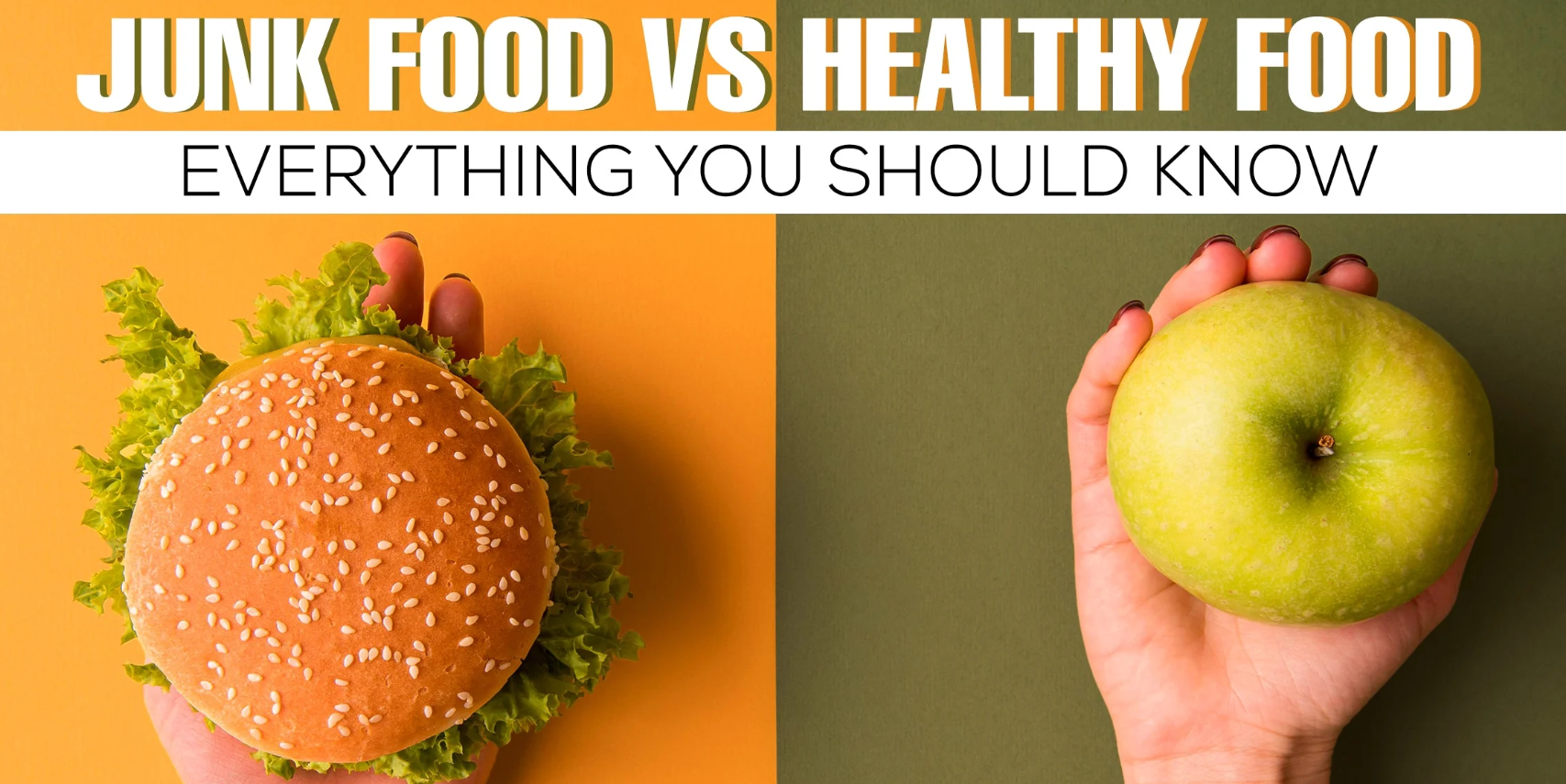
In today’s fast-paced world, junk food has become very common. While it may taste good and be convenient, it is often high in sugar, salt, and unhealthy fats. On the other hand, healthy food provides the essential nutrients the body needs to grow, stay strong, and function properly. Choosing nutritious meals over junk food is crucial for long-term health and well-being.
What Is Junk Food?
Junk food includes items like chips, sugary drinks, fast food burgers, fries, candies, and packaged snacks. These foods are often high in calories but low in nutrients. Regular consumption of junk food can lead to health problems such as obesity, diabetes, heart disease, and weak immunity.
While eating junk food occasionally is not harmful, making it a habit can negatively affect both physical and mental health.
What Is Healthy Food?
Healthy food includes fresh fruits, vegetables, whole grains, lean proteins, and healthy fats. These foods provide essential nutrients like vitamins, minerals, fiber, and antioxidants that the body needs to function well. Healthy food supports energy levels, mental clarity, and overall growth.
Eating a variety of nutritious foods every day ensures the body receives balanced nutrition, which is necessary for long-term health.
Effects of Junk Food on Health
Consuming junk food regularly can cause several health problems:
- Weight gain and obesity – Junk food is high in calories and unhealthy fats.
- Weak immunity – Lack of nutrients makes the body more prone to illnesses.
- Poor digestion – Processed food often contains little fiber, leading to stomach problems.
- Low energy – High sugar content may give short-term energy but leads to fatigue later.
- Mental health issues – Excessive junk food is linked to stress, mood swings, and poor concentration.
Junk food may seem convenient and tasty, but its long-term effects on health are serious.
Benefits of Healthy Food
Healthy food has many positive effects on the body and mind:
- Strong immunity – Vitamins and minerals in fruits and vegetables protect the body from diseases.
- Better digestion – Fiber from whole grains, fruits, and vegetables keeps the digestive system healthy.
- Sustained energy – Carbohydrates, proteins, and healthy fats provide long-lasting energy.
- Mental clarity – Nutrients support brain function, improving focus and memory.
- Weight management – Nutritious food helps maintain a healthy body weight and reduces the risk of obesity.
Eating balanced meals regularly leads to stronger, healthier, and more energetic bodies.
How to Make the Right Choice
Choosing healthy food over junk food requires planning and small changes in daily habits:
- Include fresh fruits and vegetables in every meal.
- Replace sugary drinks with water or fresh juice.
- Eat home-cooked meals whenever possible.
- Snack on nuts, seeds, or yogurt instead of chips and candies.
- Limit fast food consumption to occasional treats rather than daily habits.
These changes may seem small, but they can significantly improve health over time.
Developing Healthy Eating Habits
Healthy eating habits are the key to reducing junk food consumption. Planning meals in advance, avoiding processed food, and focusing on variety in the diet ensure balanced nutrition. Eating on time, controlling portion sizes, and staying hydrated are also important.
Encouraging children and family members to eat healthy food helps establish lifelong habits. Replacing junk food with nutritious alternatives improves overall health for everyone.
Conclusion
Choosing healthy food over junk food is essential for a strong body, sharp mind, and long-term well-being. While junk food may be tempting, its negative effects on health can be serious. Nutritious meals provide essential nutrients, improve immunity, support digestion, increase energy, and enhance mental clarity. By making conscious choices every day, people can enjoy a healthier lifestyle, prevent diseases, and feel more energetic and happy. Healthy eating is not just a habit—it is a commitment to a better and stronger life.